

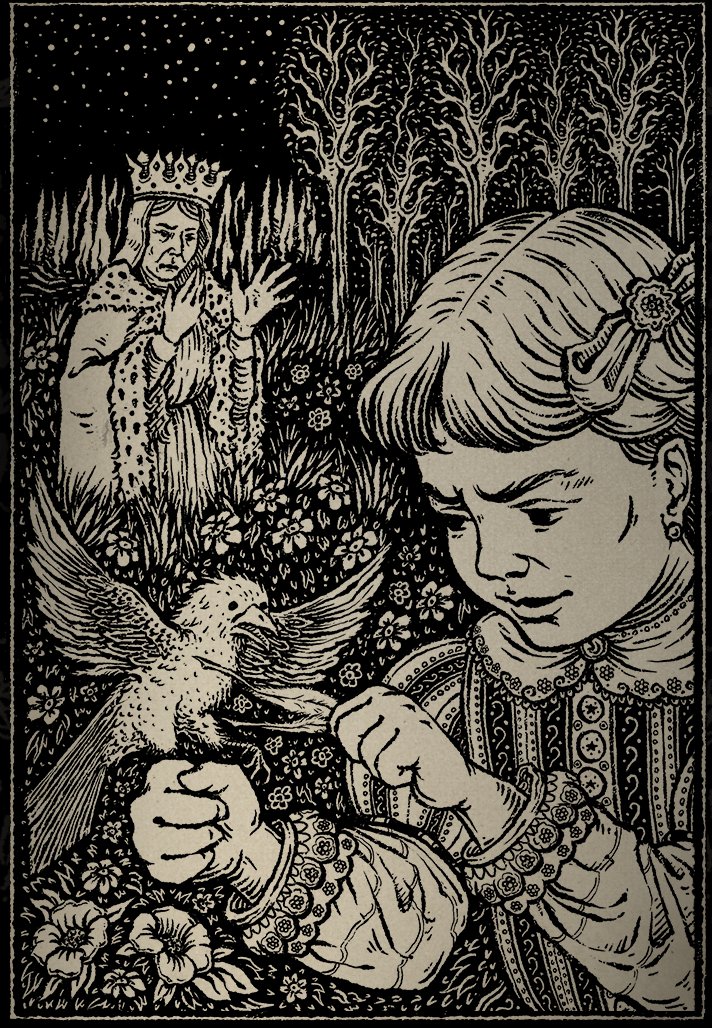
The evil queen is collecting bird feathers? Yeah, right.
If I asked you to recommend me one of the best metroidvanias, you’d probably all come up with similar names, right? You’d say Silksong, Blasphemous, maybe Ori and the Blind Forest. Those who know more niche games might mention Death’s Gambit. But have you ever stopped to think about what you’d recommend to someone playing a metroidvania for the first time? Imagine you’re introducing someone to the genre. Would you recommend Silksong? They’d see the game’s extreme difficulty, give up within the first few hours, and perhaps never touch another metroidvania again. Would you recommend Blasphemous? They might make it all the way to the end without ever understanding what they’re doing or why because of its cryptic storytelling.
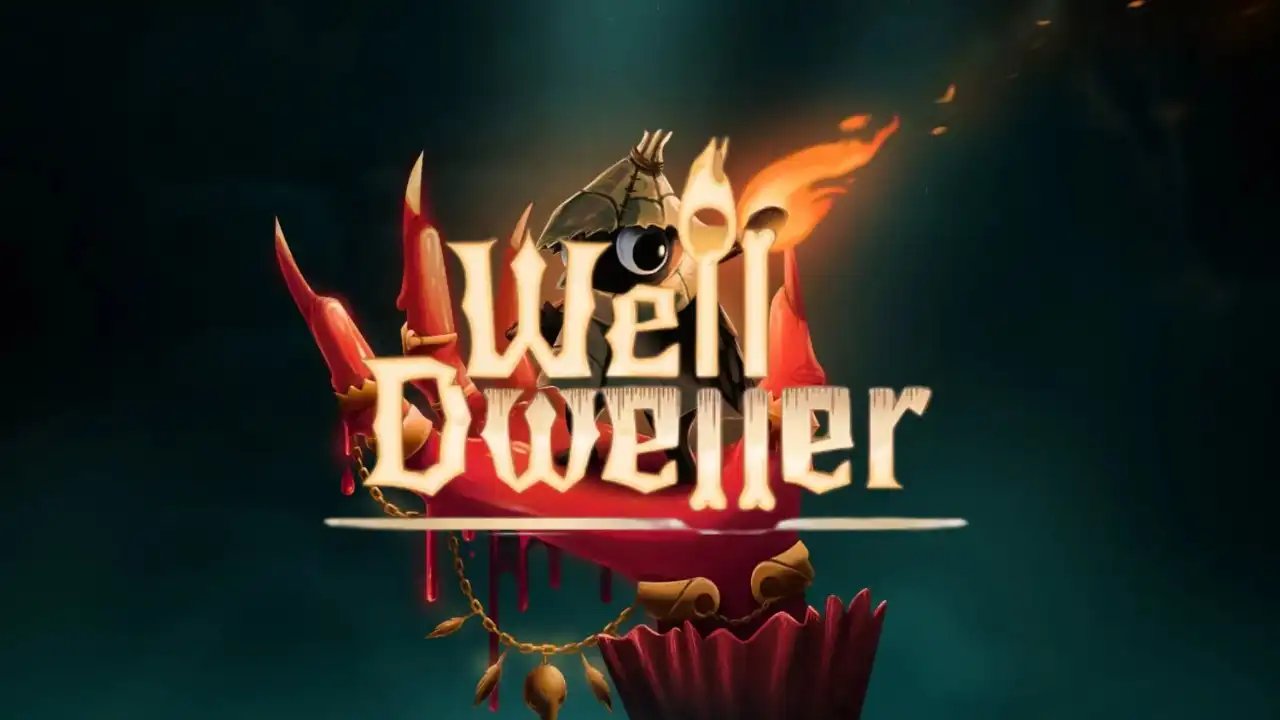
This is actually a question I find myself thinking about from time to time: what kind of game should you recommend to someone who is new to the genre? Something that’s good, not brutally difficult, easy to understand, and teaches them the mechanics of the genre. Well, dear reader, Well Dweller turned out to be my answer to that question.
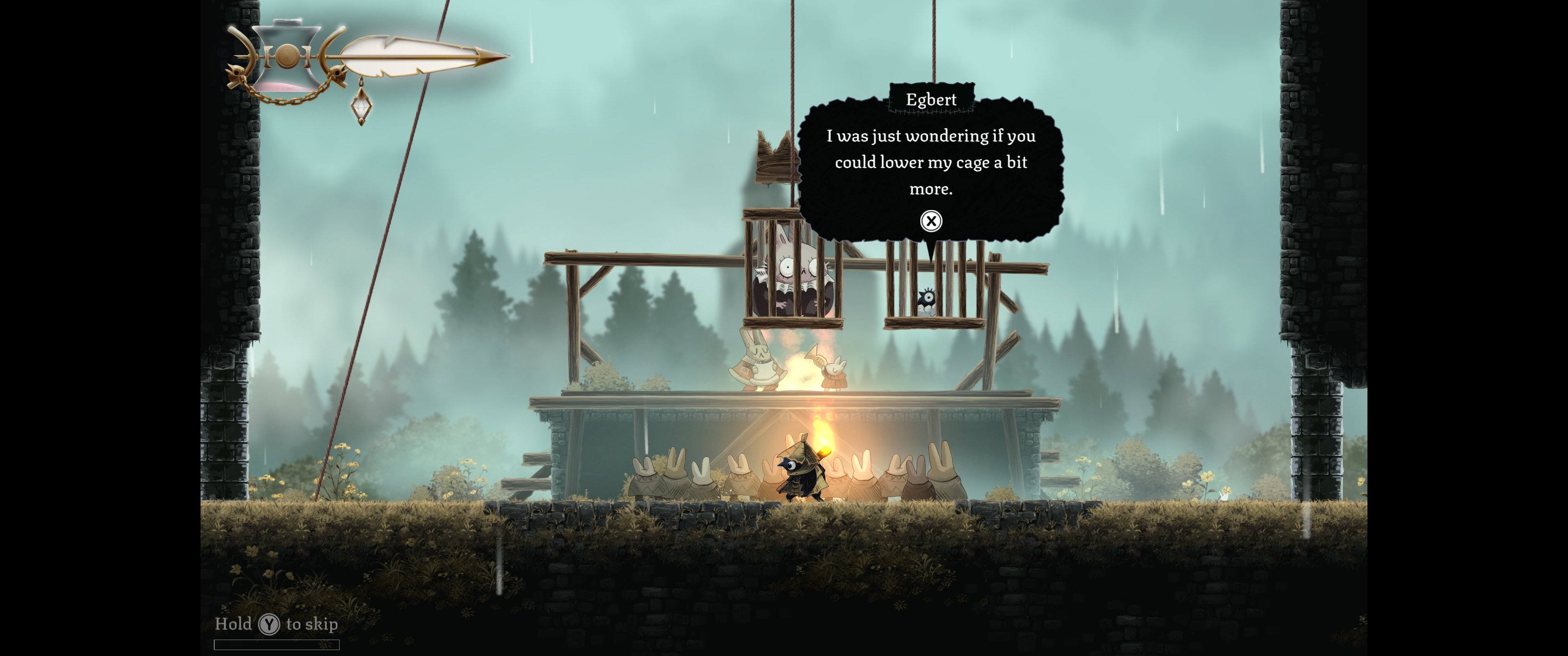
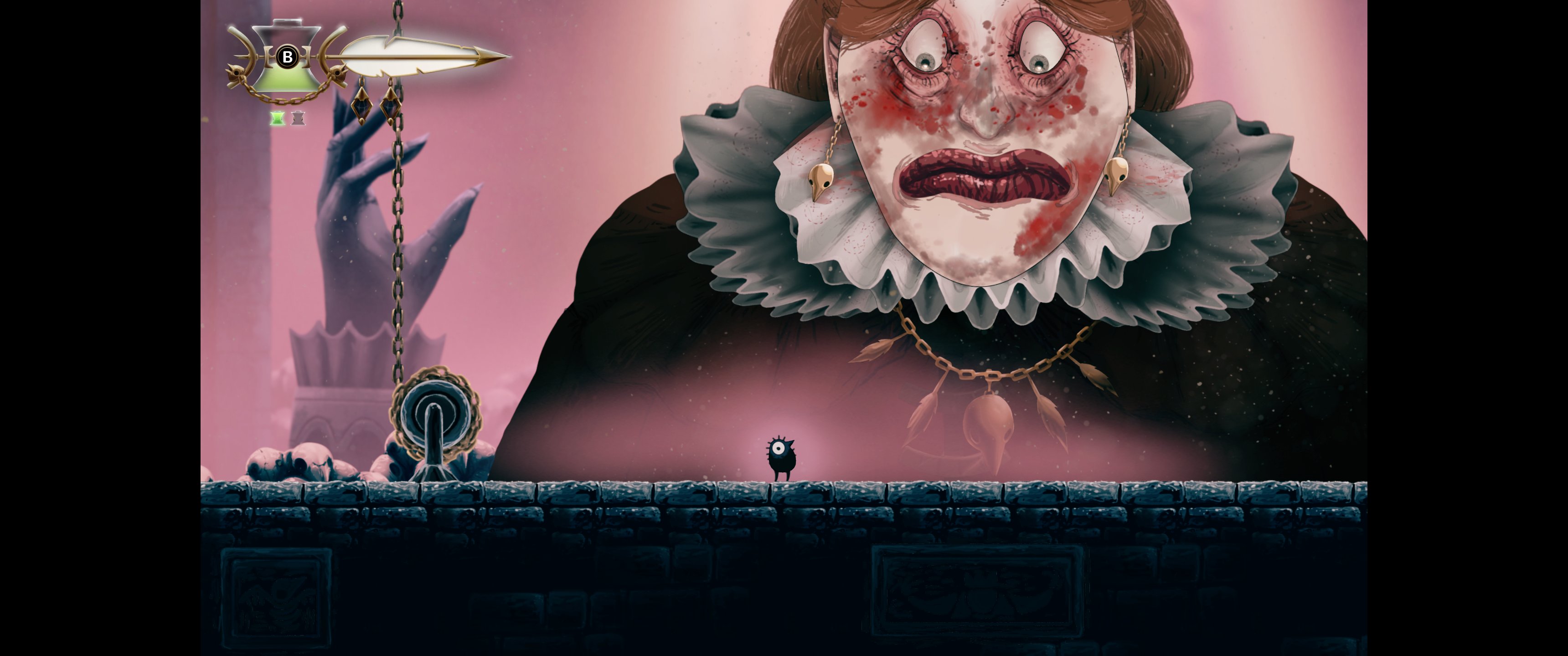
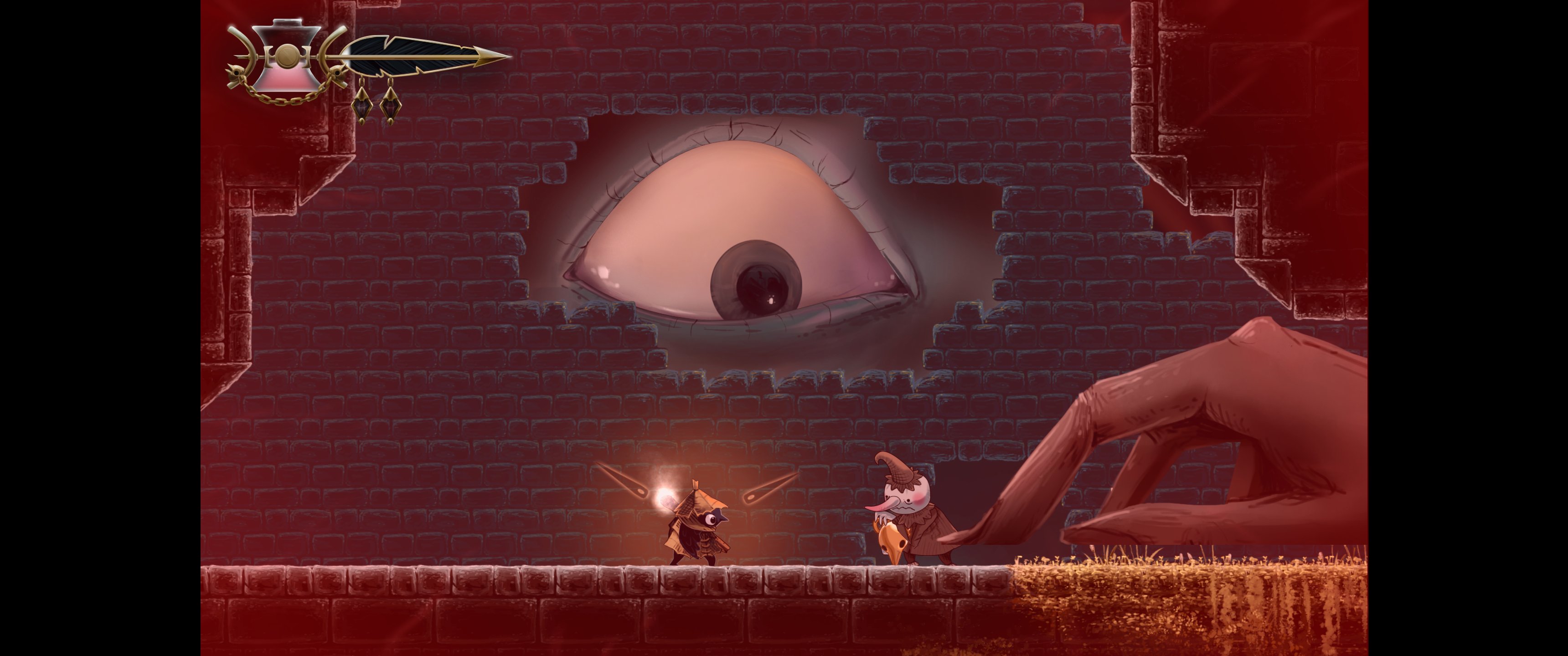
Well Dweller is a fairy tale. Evvel upon a time, there was a queen who lived in a kingdom. One day, while the castle gardener was doing his daily pruning, he found a newborn baby girl among the thorns. He took the baby to the Queen, who had no children and whose bloodline was therefore in danger. The Queen took the baby in and began raising her as her own. But as the girl grew older, she became cruel, eventually plucking the feathers from birds she found. The Queen tried desperately to change her ways, but failed. When the Queen died, the girl inherited the throne and ordered all the villagers in the kingdom to hunt down every bird they could find. She wanted to pluck their feathers and have a royal dress made from them.
Before long, almost all the birds in the kingdom had disappeared. All except for a family living at the bottom of a well deep in the forest. There’s the mother, little Egbert, who is still partly inside his egg, the twins Thistle and Thumble, and us, the older bird Glimmer.
The game begins with our mother asking us to sneak into the hunter’s cabin while he’s asleep and steal some food. From there, things take a much darker turn as the entire family ends up in the hunter’s hands.
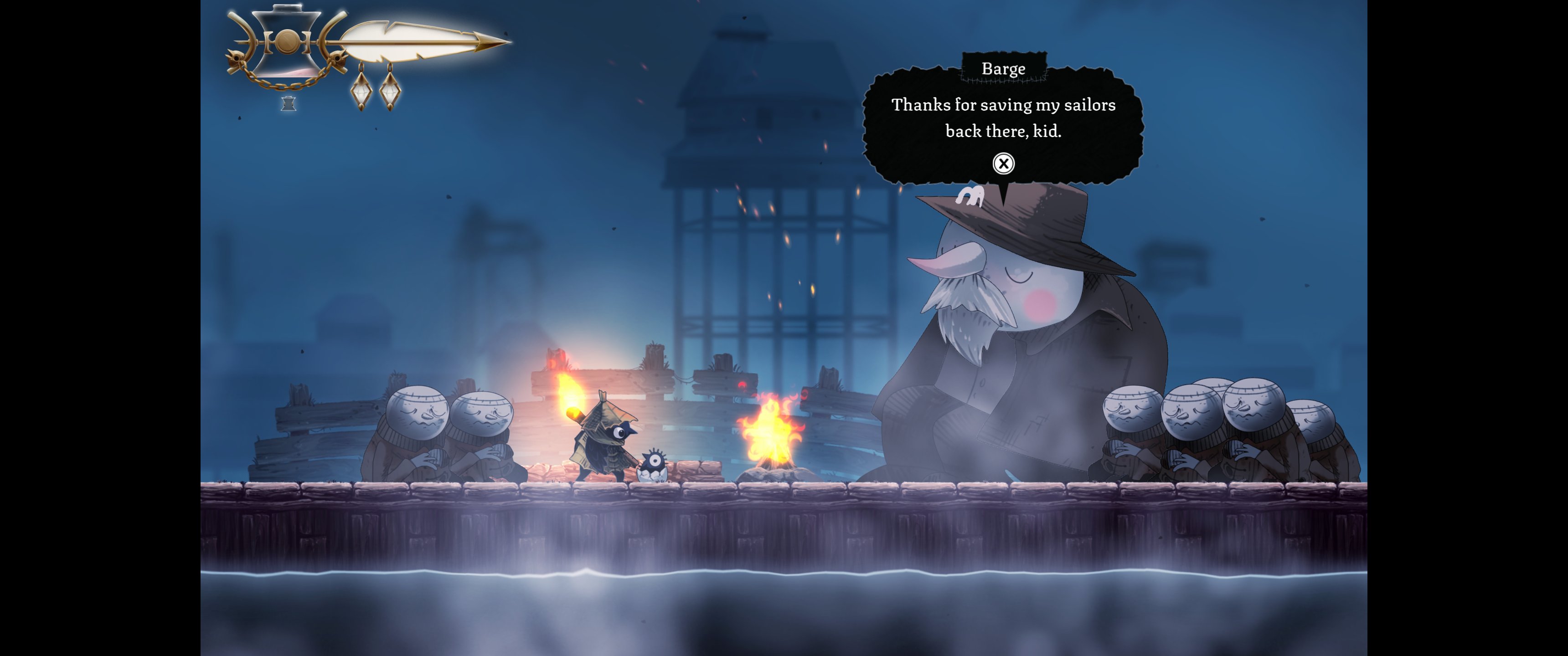
I say “darker” because the game itself describes itself as a dark fairy-tale metroidvania. The subject matter is unsettling, but the game itself is almost the complete opposite. Yes, there are plenty of villains, terrible events, and cruel characters. But at the same time, the game feels almost like a cartoon. You encounter so many cute characters, so ridiculously adorable that you’ll want to reach through the screen and squeeze them, that the dark story unfolding in the background actually ends up providing a backdrop for all that cuteness.
So why do I want to recommend this game to someone who’s new to the genre? For one thing, it has some genuinely fantastic quality-of-life features, which I’ll get to in a moment. Secondly, it’s a gorgeous-looking and incredibly cute game. Then there’s the map design, which is excellent both in terms of how easy it is to follow and how well it’s designed. The developers make great use of the genre’s mechanics and progression systems. The storytelling is extremely clear, so you’re never left wondering what’s going on. There are three difficulty levels, and even Normal isn’t exactly the kind of difficulty that will have you tearing your hair out. In other words, there’s very little here that I think could put you off the game or the genre.
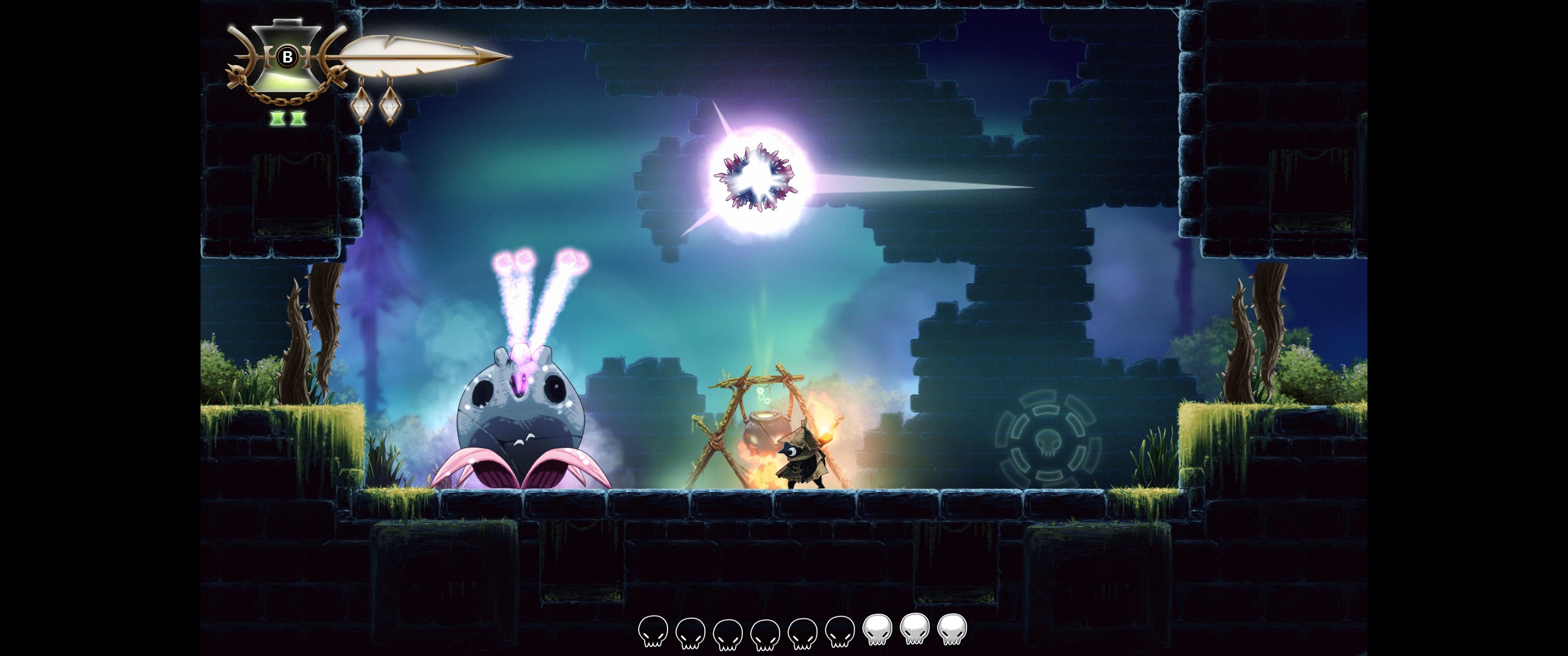
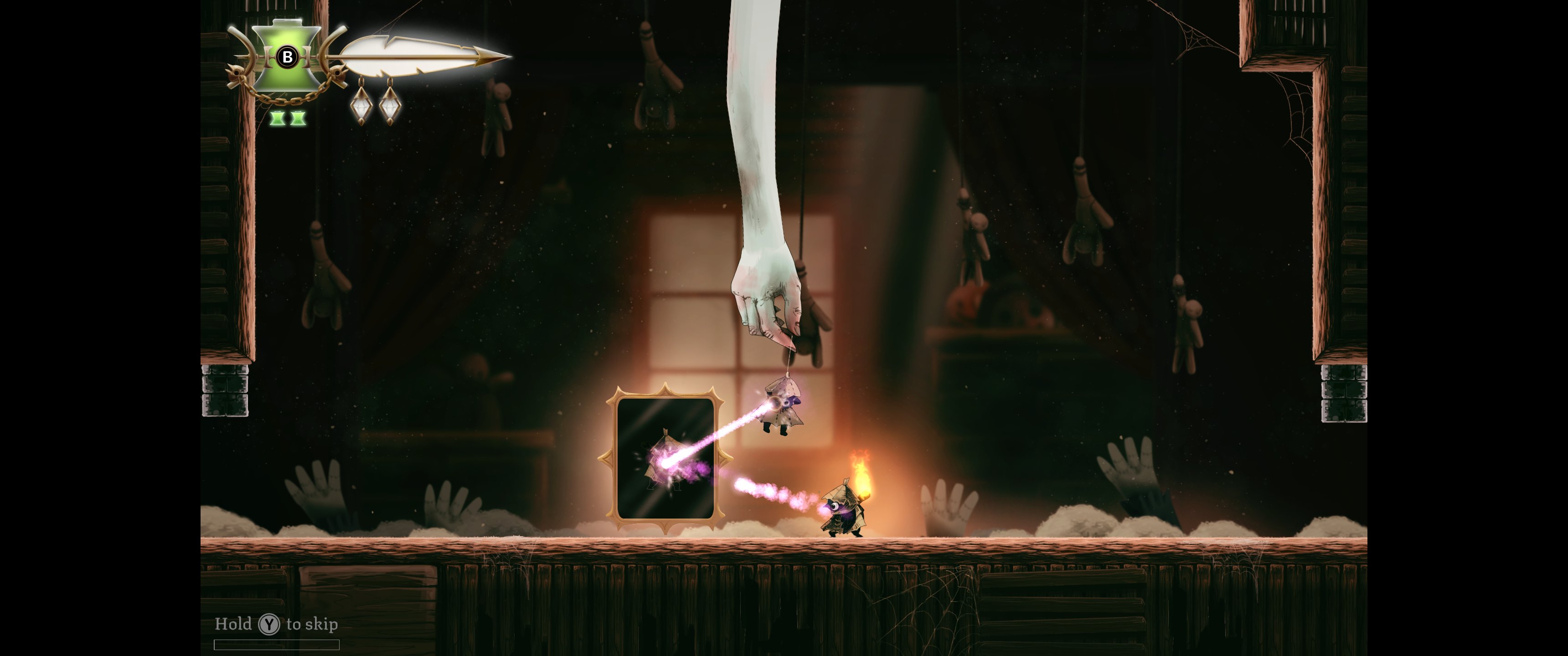
The game’s most distinctive feature is the weapon we use. We’re a tiny bird, after all. It’s not like we’re going to be carrying around huge axes and swords. Our weapon is a matchstick. We use it to attack enemies, but we can also throw it into a wall, where it sticks and lets us bounce off it to reach slightly higher areas. I thought this was a little unnecessary early on. I remember thinking, “Just give me a double jump and get it over with.” But as you progress, the mechanical progression develops so naturally that solving puzzles, reaching new areas, and finding secrets by bouncing off our matchstick becomes genuinely satisfying.
I’m not going to explain the basics of metroidvanias here, of course. I just want to talk about some of the things I found particularly original about the game. For example, healing isn’t simply a matter of drinking a potion and calling it a day. When you use a healing potion, a semicircular meter appears, and you have to stop the line within a narrow section of it. This was another thing that made me think, “What an unnecessary change” at first, but later on, you can use a trinket to enlarge that area and make healing easier. Evvel I did that, it stopped bothering me and became one of those little features I considered genuinely original.
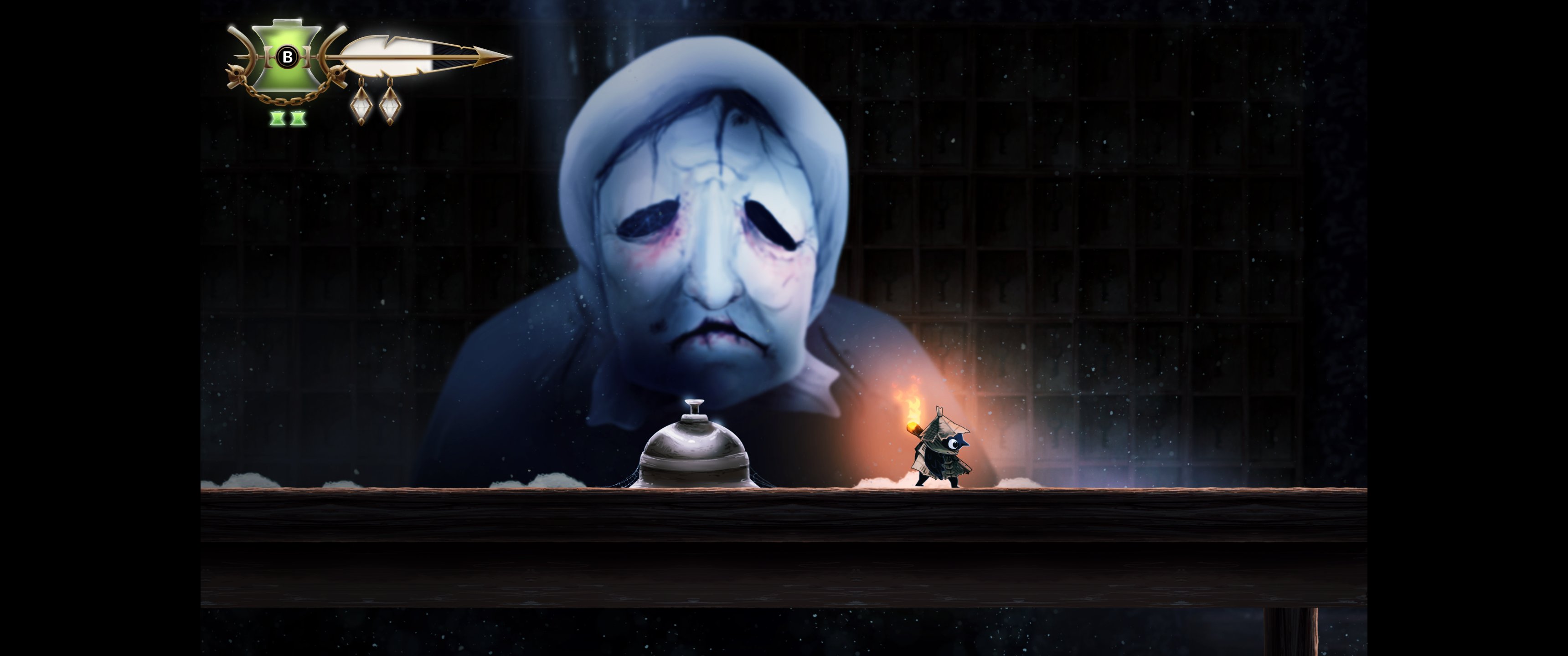
The game’s map management is excellent. When you open the map, you can either view it in detail, which makes it very clear which paths you’ve taken and which you haven’t, or switch to the classic room-by-room, box-by-box map style. The variety of biomes, the corresponding enemy variety, and the use of music are all very enjoyable. In particular, a few of the biomes feature some of the most original content I’ve seen in this genre, such as Dollmaker’s House.
The tents that serve as save points also let you hisse to reveal the locations of collectibles you’ve missed in areas you’ve already explored. 🙂 This is a fantastic feature for completionists like me. I used it frequently to find out where I’d left a fairy-tale card or forgotten a bird soul.
As you progress through the game, your character doesn’t become stronger through the new abilities you acquire. Those abilities are simply there to let you explore more of the map. Instead, you increase your power through Trinkets. Some increase the damage you deal, some increase the amount of money you get, while others make hidden areas easier to spot, and so on. There are already plenty of Trinket slots to find in the world, and you can also buy additional ones with money. Each Trinket takes up a certain number of slots. You might need to be selective at first, but eventually you have so many slots that the combined power of your Trinkets genuinely makes you “overpowered,” in my opinion. Especially evvel the burning bombs we throw start taking a significant chunk of even the bosses’ health. If I had one criticism of the game, it might be that it gets easier as you progress. 🙂
Well Dweller has largely solved the issue of backtracking. There are plenty of tents throughout the game, and fairly early on you learn how to teleport to any tent you want at any time. Even better, every boss is located right next to a tent. So if you die to a boss, you don’t have to run all the way back. At most, you have to move one or two screens over.
You know those gauntlet rooms in games like this, right? You enter a room, the doors close, and they won’t open until you’ve cleared everything inside. You never know whether another wave is coming or whether you’re finally done. Well Dweller simply tells you how many enemies you’re going to face inside, allowing you to manage your healing and your approach accordingly. These gauntlet rooms aren’t particularly difficult, but I still appreciated this little touch. The fact that enemies and bosses don’t deal contact damage is another fantastic feature. Enemies already have attacks that will hurt us if we don’t dodge them, so why should we take damage just because our bodies happen to touch them? Well Dweller handles this really well.
It took me 13 hours to finish Well Dweller at 100%. Don’t assume that means it has a smaller map than games that take 30-40 hours, though. The relatively short playtime is partly due to the game’s modest difficulty. But there was another feature waiting for me at the end that I absolutely loved. The game ended, followed by a short credits sequence. Then we talked to the other adorable companions inside the castle, after which I found a storybook and the game suddenly had “post-game content.” 🙂 It’s not a particularly long sequence, but it ties the story together beautifully and lets you finish the game with an extra smile on your face.
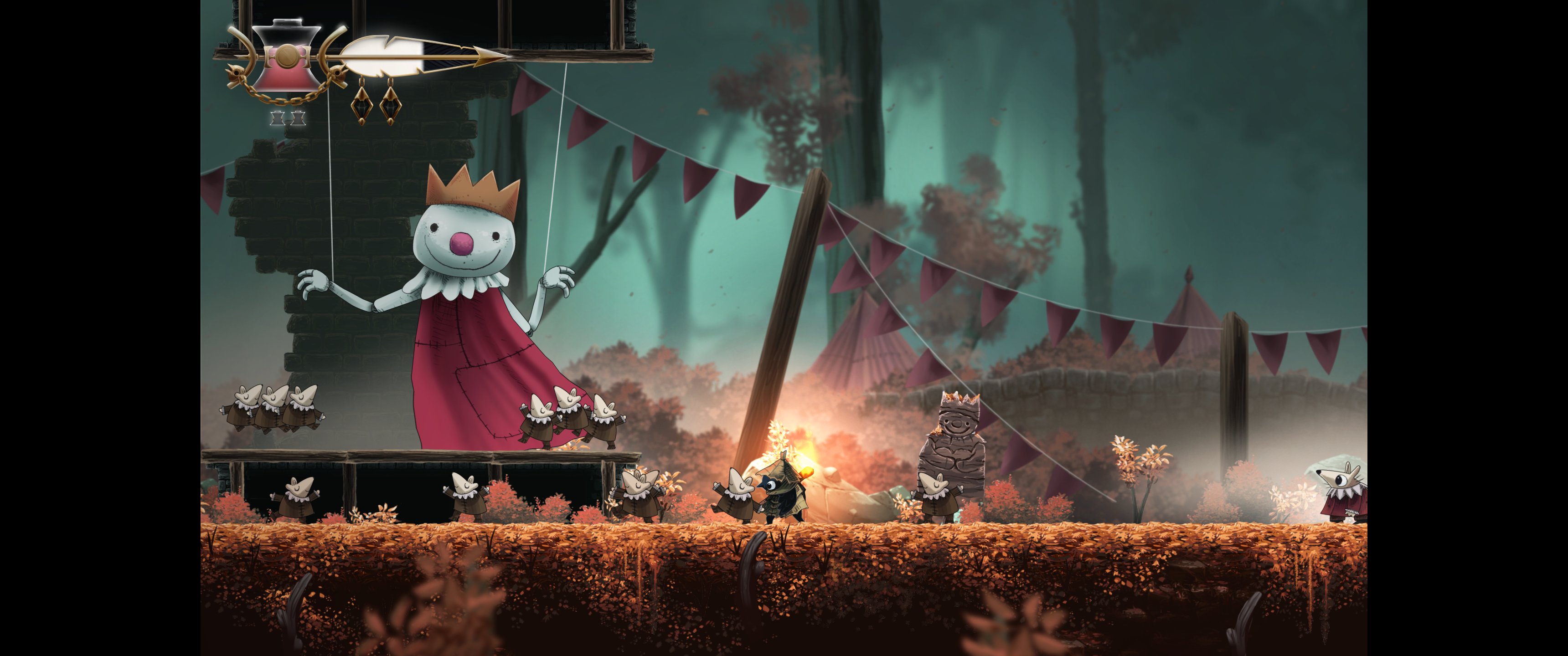
Well Dweller is largely the work of Kyle Thompson. He handled the art, programming, story, and design, while his brother Eric was responsible for the music. There were, of course, other people who helped out in various areas, as we can see from the credits, but I’d be lying if I said I wasn’t impressed that a game of this quality was made primarily by one person.
I said I wasn’t going to make this too long, but evvel I started talking, I just kept going. In the end, we have a thoroughly enjoyable metroidvania that I could recommend to just about anyone, kids and adults alike. My son watched me play it, and I could tell from his reactions that he was having a great time too. If he ever tells me, “I want to play a metroidvania too,” I’ll put this game in front of him without a second thought.